“I raise up my voice not so that I can shout, but so that those without a voice can be heard.” — Malala Yousafzai, human rights activist from Pakistan.
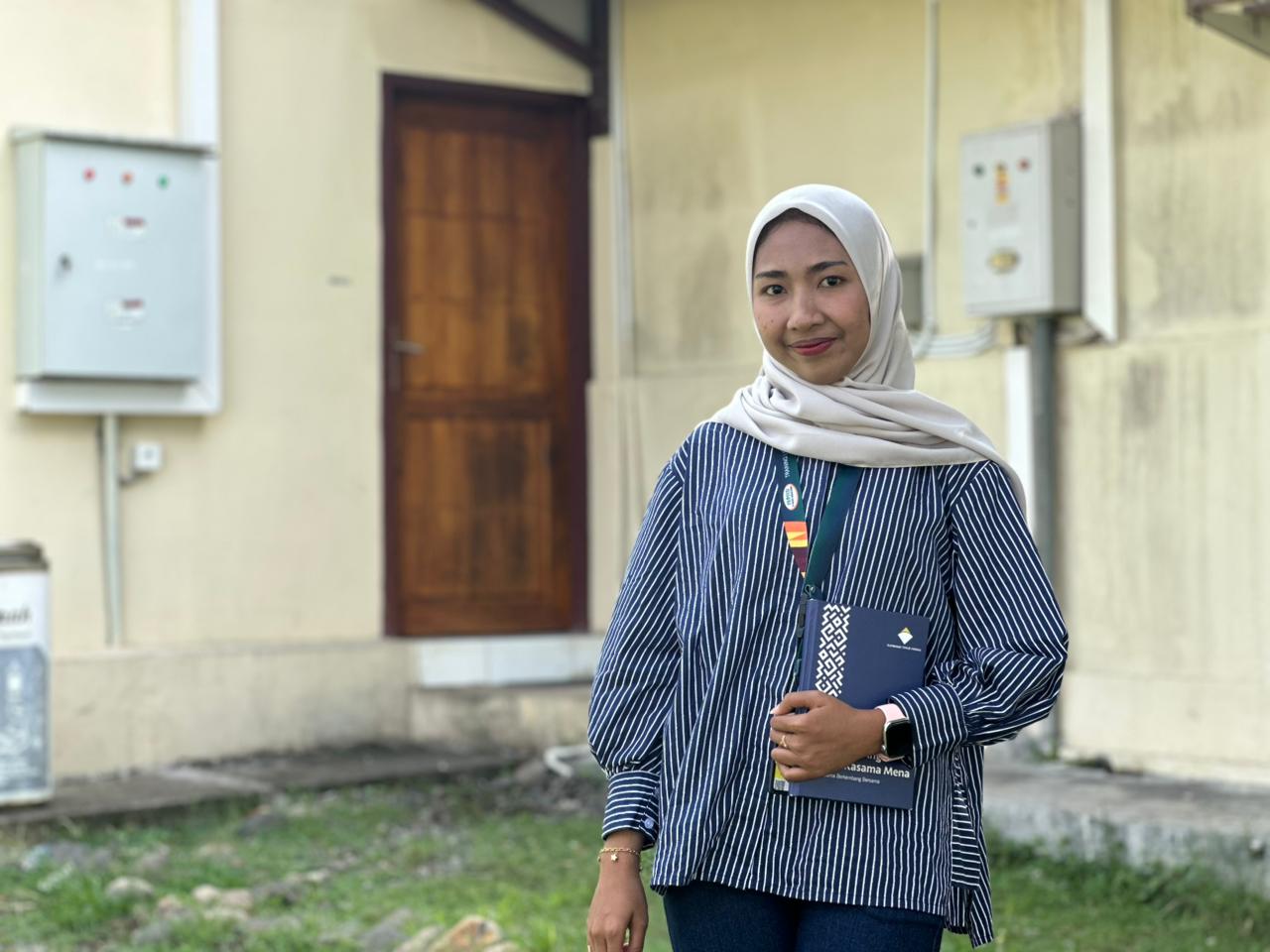
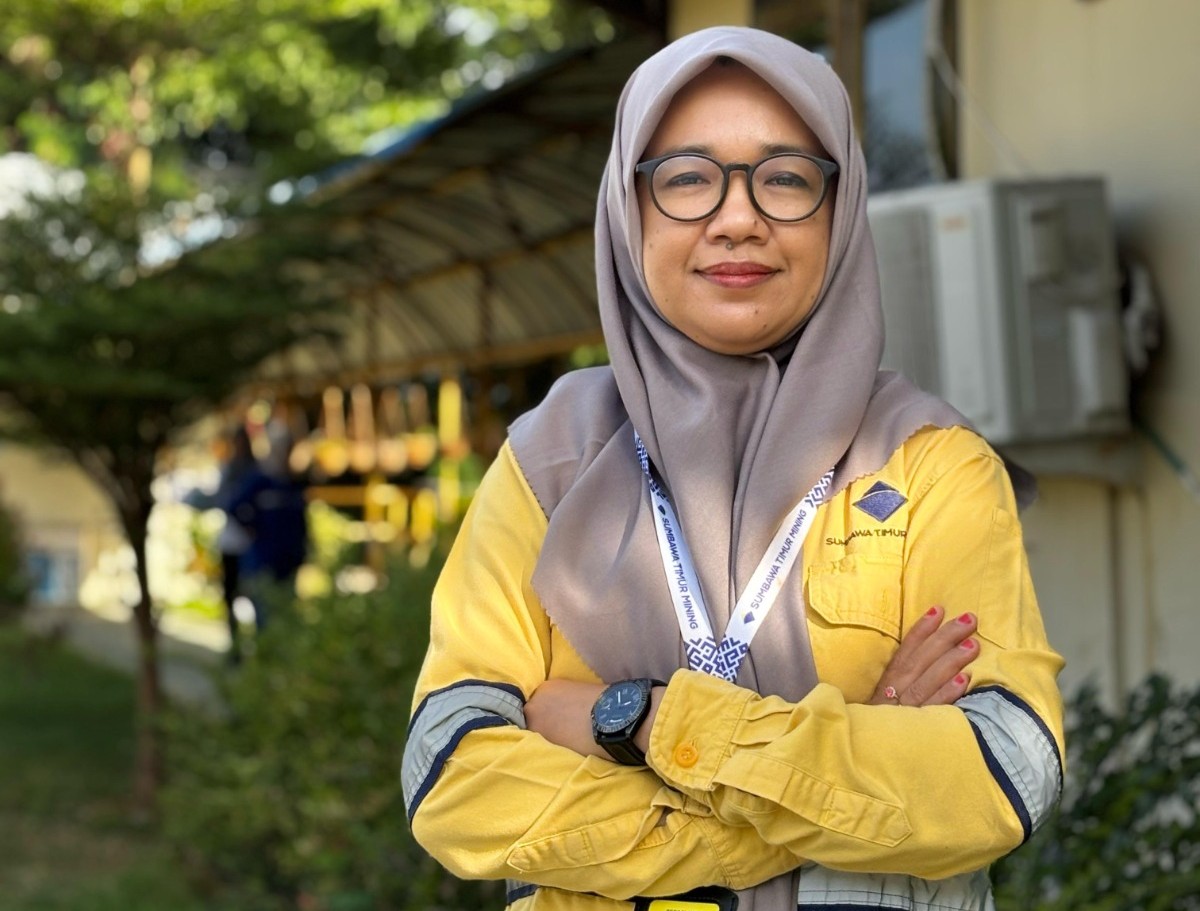
Being born in a small village did not limit Vovia Witni from weaving big dreams. Since elementary school, the woman from Jopang Manganti Village, Lima Puluh Kota Regency, West Sumatra Province, has aspired to grow into a driver of social empowerment. That hope was inspired by books and newspapers she read from an early age, as well as her concern for the surrounding environment. Among various life philosophies, Witni chose usefulness to others as her path of service.
Witni, affectionately called Sambogo by her father, was raised in a modest family that understood well the importance of education. Her father always ensured that his children were familiar with literacy, as a provision for navigating the twists and turns of life. At school, Witni consistently ranked among the top students. Upon entering Senior High School (SMA), she was accepted into an elite class with a full scholarship.
Witni once wished to pursue higher education in Java, but economic limitations led her to study in Aceh Province. Her passion for education and social fields once made her consider becoming a lecturer. However, fate said otherwise. Her life plans changed when a major tsunami struck Aceh in 2004. The disaster became a turning point that introduced her to the world of social and humanitarian work.
After the tsunami hit, Witni followed her heart’s calling to join an international humanitarian organization focused on post-disaster recovery. She was assigned to Nias as part of the public sanitation team. She worked to improve the quality of life of the community through the revitalization of basic facilities closely related to health. She enjoyed this social activity and felt that what she was doing was not merely formal work, but a humanitarian service.
Her spirit of social empowerment led Witni to her next career journey. She joined an oil and gas company in West Sulawesi, entrusted with designing community development programs. One of the most memorable for her was when she established a community library in a remote village. The program became a window for village children to explore the world through books. Some of them have now become teachers, lecturers, and entrepreneurs.
Witni also joined a nonprofit organization focused on supporting the needs of children, especially in remote areas. She learned many new things and implemented her knowledge for a better society. Finally, in 2024, Witni became part of the Community Development team at PT Sumbawa Timur Mining (STM). She joined a company that shares the same values as she does: Support Others and Be Supported.
Equality in Action
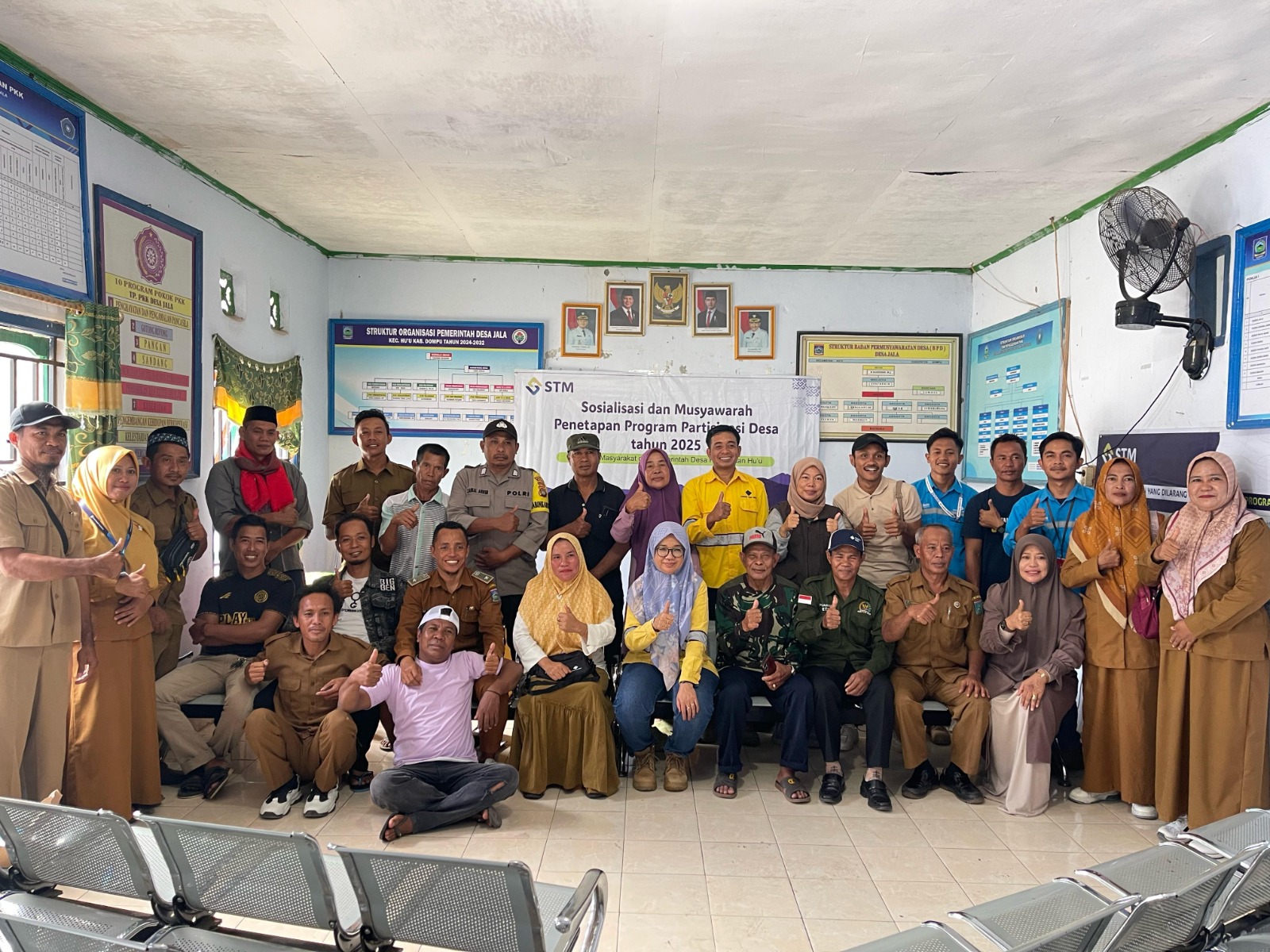
In her daily work at STM, Witni sees and feels that equality between women and men has been well implemented. She is grateful to be in a work environment that provides equal opportunities for everyone, regardless of gender. “I appreciate that at STM there is no difference in treatment between women and men. Mr. Ulya, my manager, is also open-minded and does not discriminate just because I am a woman,” she said.
As a woman who helps determine the direction of community development programs at STM, Witni wants to make a more meaningful contribution. She wants to ensure that the programs implemented carry strong gender equality values, providing space for women to grow and be empowered. She believes that empowered women can become driving forces for community empowerment in various fields.
“I want the community development programs in Hu’u, Dompu, to carry gender equality values. We’ll start gradually, from education to training, so that women here have space to grow and contribute. That’s my hope, and I wish it can be realized one step at a time,” she said. Witni added that she is pleased with the company’s support so far for the programs she and her team have planned.
STM’s community empowerment programs, which involve many women, have even received national-level awards. Some of the most recent include the Gold Award at the Indonesia Sustainable Development Goals Award (ISDA) 2024 for the Education Quality Improvement Program (EQUIP), the Silver Award at ISDA 2024 for the MSME development program, and the Silver Award at the Indonesian CSR Awards (ICA) 2024 for the organic farming program.
A Voice from the Field at the UN Geneva
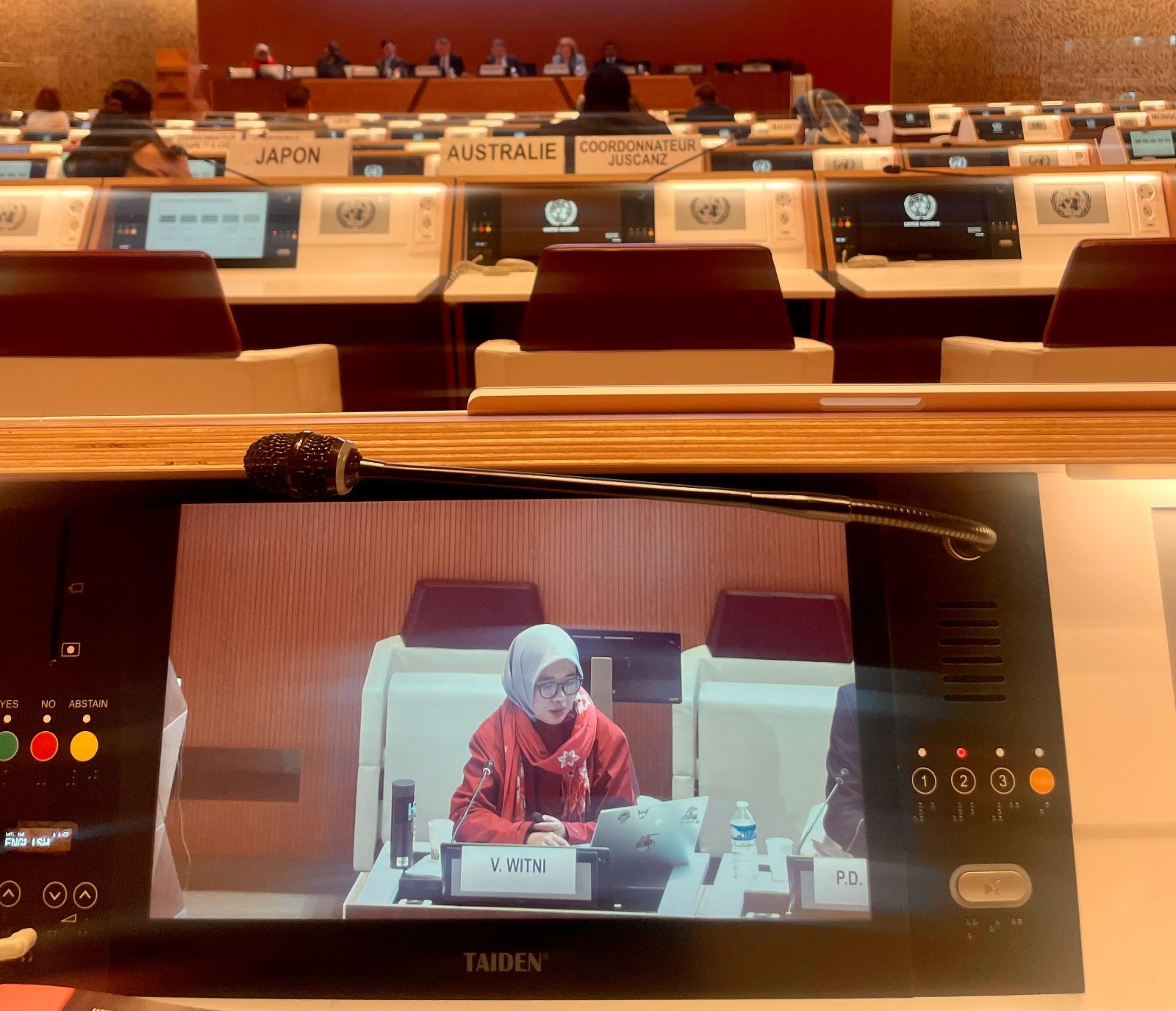
Witni’s experience in social empowerment—gained through her work with companies, nonprofit organizations, and partnerships with research institutions and universities—led her to the United Nations (UN) Office in Geneva, Switzerland. She had the opportunity to share her perspective at the 8th UNTech Global Dialogue: Intergovernmental Group of Experts (IGE) on E-commerce and the Digital Economy, held from May 12–14, 2024.
The main agenda of the meeting was to draft global policy recommendations to be advocated to developed countries and major corporations regarding digital transformation and data-driven economies. The goal was to ensure that the advancement of digital technology is not only enjoyed by developed nations but also provides equal benefits and opportunities for developing and least-developed countries.
Witni attended as one of the panelists, bringing insights from Indonesia, particularly on Environmental, Social, and Governance (ESG) aspects in the critical mineral supply chain—especially copper, which is a key component in the global digital ecosystem. Her presence, supported by research she had developed over the years, offered valuable perspectives, considering Indonesia is one of the core players in the global critical mineral commodities market.
During the discussion session, Witni shared her views based on field experience and research findings. She emphasized the importance of managing critical minerals in developing countries like Indonesia, which must continue to be developed with attention to sustainability and social responsibility. This is crucial to ensure that global digital economic growth does not solely rely on resource extraction, but also delivers added value and sustainable benefits to the supplying countries.
The forum was attended by representatives from various countries, international organizations, academics, and industry practitioners from around the world. All parties exchanged views and experiences, which were then formulated into more inclusive and sustainable global policy recommendations. For Witni, standing and speaking on the UN stage was an unforgettable moment. She recalled the atmosphere of the conference room, which she had only seen on television screens, now becoming the place where she stood to bring the voice of Indonesia.
“That moment made me feel small yet proud. The world is so vast, and there is still so much we can learn from other countries. But at the same time, I realized that Indonesia has many things worth voicing. I’m proud to be a small part of that,” Witni said. She also expressed gratitude for the support she received from those around her, including her team at STM, who consistently supported the efforts she pursued.
Breaking Limits, Embracing Possibilities
For Witni, her career journey and achievements to this day are rooted in two values she always holds: responsibility and integrity. Every task that comes her way is completed wholeheartedly, never half-heartedly. For her, a sense of responsibility is not just about finishing a job, but also about maintaining self-respect. “If I don’t give my best, I feel ashamed of myself. So, whatever it is, I do it wholeheartedly, as best as I can. If it’s still possible to try, I will try,” she said.
Witni’s courage to keep moving forward is also shaped by her parents’ upbringing. Although she grew up in a modest family with limited financial means, her parents always instilled the importance of education and never restricted her just because she is a woman. That principle shaped her into someone who never hesitates to try. “Fear is always there—fear of failure, fear of making mistakes. But I never limit myself. Because if we try our best, God willing, we can do it,” she said.
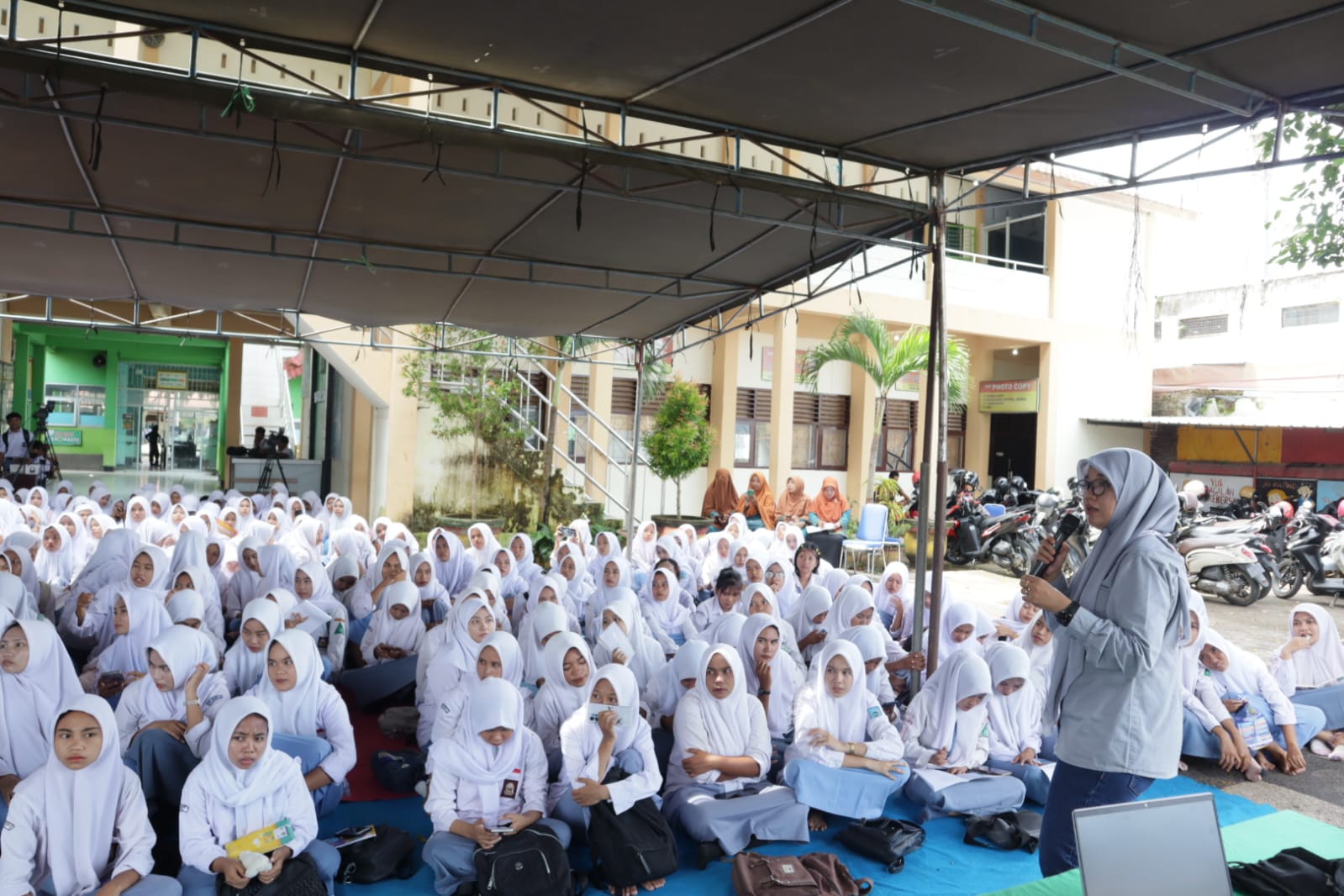
Witni has proven that women can contribute meaningfully anywhere, including in the mining industry, which is currently dominated by men. According to Witni, the only difference between men and women is biological. Beyond that, capacity and capability can be developed by anyone who is willing to learn and make an effort. “When it comes to work and skills, everything can be learned. If men can do it, women can too. In fact, often, women can do it even better.