Born in Dompu Regency, West Nusa Tenggara Province, Mulia Fatwa grew up in modest circumstances that taught him the true meaning of self-reliance. Every decision he made was grounded in responsibility, especially when choosing where his steps would lead. Since he was young, he dared to expand his horizons—wandering through rivers and hills, observing everything, including the rocks that shaped his homeland’s landscape.
Mulia often felt compelled to travel further, as though the wider world was calling his name. He believed that Dompu was one piece of a larger lesson about the earth and life, while other pieces were scattered across the compass. “Since childhood I’ve always enjoyed adventure. Over time, that curiosity grew into an interest in everything related to nature and the structure of the earth,” Mulia recalled.
After completing his secondary education at SMAN 1 Dompu in 2011, he was determined to pursue higher studies outside Sumbawa Island. His choice fell on the National Institute of Technology (ITN) Yogyakarta, majoring in Mining Engineering—guided by advice from a senior at school. “He told me how the mining world is challenging and full of opportunities. That’s when I thought, this seems like the right world for me,” he said.
Mulia realized that mining could take him on the journeys he longed for. But beyond travel, he felt the discipline matched his interests and talents. “I found the knowledge I studied very relevant to my interests. It wasn’t just theory, but a lot of field practice. That’s what made me fall in love with this field even more,” said the sixth of seven siblings.
His passion for science made it easier to dive into applied studies, especially geotechnics in mineral exploration. Thanks to strong academic ability, Mulia was trusted as a teaching assistant in the rock mechanics laboratory and even contributed to a dissertation project. “I was asked to help collect research data, while also making it my thesis topic. So, I hit two or three birds with one stone,” he explained.
Beyond academics, Mulia sharpened non-technical skills and expanded his social network. He served as Chairman of the Dompu Student Association (IPMD) in Yogyakarta from 2013–2015, while also active in his department’s student union. “I interacted with friends from Papua, Java, Kalimantan, Sumatra, and more. That’s where I learned cross-cultural communication,” said the man from Woja District.
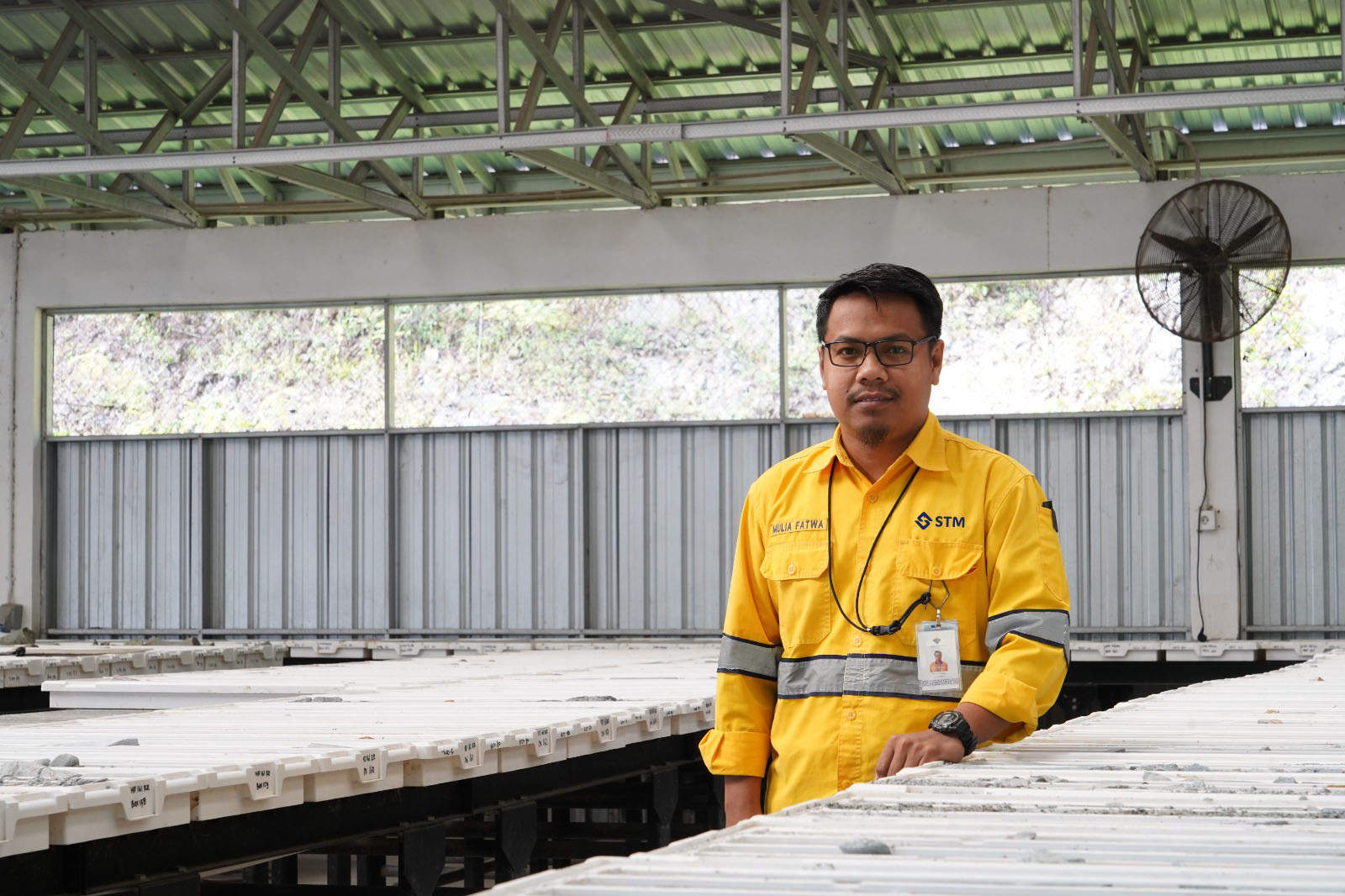
His persistence paid off when he graduated in 2016. Since then, he gained experience in several mining projects across Indonesia, including East Java and North Sulawesi. He handled geotechnical work, rock mass classification, and coreshed management—further strengthening his capacity as a Geotechnical Engineer ready to contribute in any terrain.
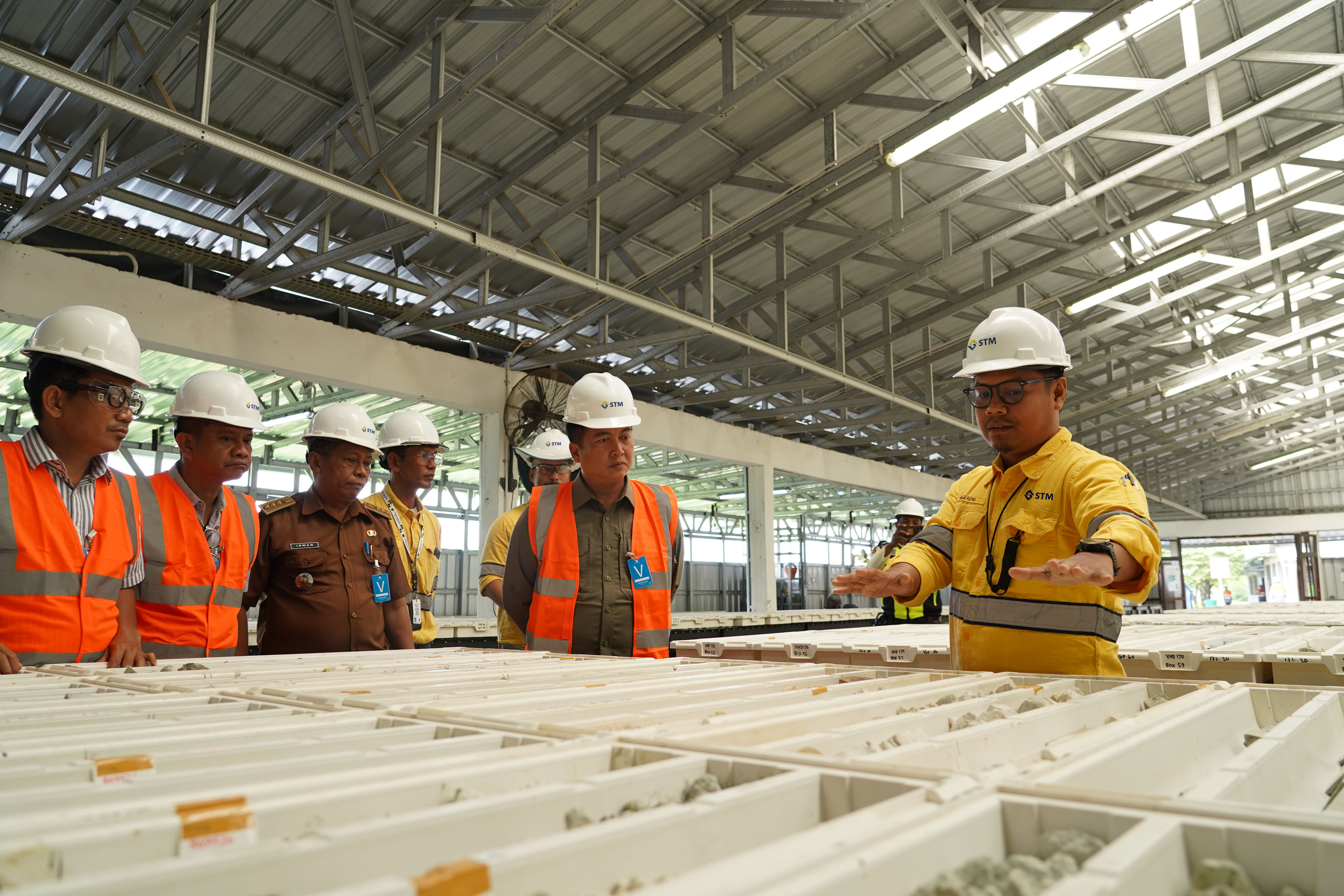
Mulia Fatwa presenting Onto Deposit core samples to the NTB Governor Dr. H. Lalu Muhammad Iqbal and accompanying officials.
Back Home, Driving Progress
In 2021, PT Sumbawa Timur Mining (STM), the copper exploration company managing the Hu’u Project, opened opportunities for professionals to join. Mulia felt called to return. He wanted to contribute, believing the Hu’u Project held significant potential to support Dompu’s growth. He pursued the opportunity and completed the recruitment process.
“I was interviewed directly by a manager from Brazil at that time, and it turned out my geotechnical experience was highly relevant to what they needed,” he recalled. With determination and capability, Mulia officially joined STM as a Geotechnical Engineer in the exploration team. “I felt like I was redeeming something I hadn’t done before—contributing to my own region,” he added.
As a Geotechnical Engineer, Mulia works closely with numbers, rocks, and analysis. “Our task is simple but crucial: ensuring all geotechnical data collected is accurate and reliable,” he explained. These data are used to determine mining methods, rock classification, and workplace safety systems. “If the data is even slightly wrong, the impact can be huge. That’s why we enforce the strictest quality control,” he continued.
For Mulia, working on the Hu’u Project is both a challenge and a valuable experience. There is always room to learn and grow. “Like climbing stairs, there’s always a new lesson at every stage of this project. I’m very grateful and hope to keep contributing,” he said. He added that everyone in the project supports each other to achieve shared goals. He believes every STM team member plays an important role in advancing the project.
Mulia is optimistic that the Hu’u Project will present even greater opportunities in the future. But these opportunities must be met with improved skills. In his view, being a local talent is a good starting point, but not enough on its own.
Being a local isn’t just about origin—it’s about contribution. If we have the skills needed, the company will accept us, no matter where we come from.
He encourages Dompu’s younger generation to keep building their capacity and pursuing their dreams. “I’ve seen extraordinary changes since STM arrived. Opportunities weren’t as abundant before. Now, many young people in Dompu are thinking bigger—wanting to study outside the region, wanting to learn new things,” he said. Mulia believes local talent can compete professionally, as long as they are willing to learn and work hard.
---
Local talent is an integral part of the Hu’u Project journey. Explore career opportunities with us here.